

FAQ n°5 — Using Past Election Results to Prepare Your Next Campaign
Every election leaves behind precious strategic raw material: the fine-grained geography of the vote, polling station by polling station (precinct by precinct, ward by ward). This FAQ answers the 7 essential questions for intelligently exploiting previous election results to prepare for the next race — whether you are gearing up for local, regional or national elections anywhere in the world.
Why Analyse Previous Election Results Before Launching a Campaign?
The previous election is the best crystal ball available for anticipating the next one. It delivers three pieces of strategic intelligence that no opinion poll can provide with the same geographic precision. First, the real map of your strengths and weaknesses in every neighbourhood (quartier, wijk, Stadtteil, ward, barrio, rione) of your constituency or municipality, polling station by polling station. Second, the swing precincts (swing polls), where the gap between candidates was narrow and where future elections will be decided. Third, the low-turnout precincts, which represent your priority mobilisation reservoir. No serious campaign launches without this preliminary analysis. Yet most candidates skip it, for lack of time, data or method. This is precisely where electoral geomarketing intervenes: transforming the raw results of past elections into an operational strategy for the next one. This logic applies to a candidate in the 2027 French presidential race analysing the 2024 legislative results, a candidate in the 2030 Belgian gemeenteraadsverkiezingen analysing the 2024 communales, a candidate in the 2029 Quebec municipal elections analysing the 2026 provincials, a candidate in German Kommunalwahlen analysing the previous Landtagswahlen, or a British council candidate analysing the last local elections.
Which Elections Should I Compare to Anticipate an Upcoming Vote?
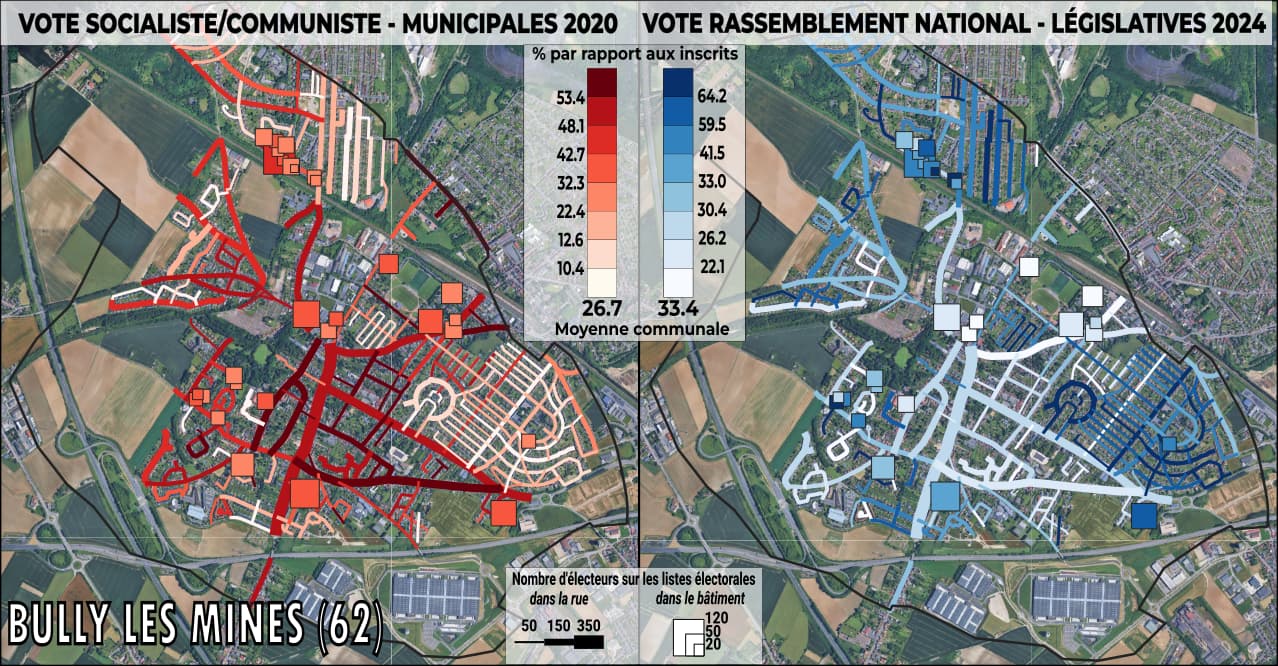
The relevant comparison depends on the election you are preparing and the level of information available. Three logics combine. First logic: comparison between elections of the same type. To prepare for municipal elections (municipales, gemeenteraadsverkiezingen, Kommunalwahlen, elezioni comunali, council elections), compare with the previous municipal elections — same stakes, same electoral system, same voter behaviour. To prepare for legislative elections, compare with the previous legislative elections. Second logic: comparison between recent elections. The results of a 2024 European or presidential election are often more predictive, even for a different type of vote, than the results of the same local elections in 2020, because the political landscape has changed too much in five years. Third logic: comparison between elections at the same turnout level. High-turnout elections (presidential, referendum, Belgian communales with compulsory voting, Indian general elections) cannot be compared directly with low-turnout elections (European, cantonal, French municipales, British local elections, Dutch gemeenteraadsverkiezingen). The intelligent combination of these three logics produces a solid strategic reading that goes far beyond simple extrapolation from the latest vote.
How Do I Project Municipal Results Onto a Legislative Constituency?
This is a technical exercise with major strategic value in countries where legislative constituencies and municipal boundaries do not overlap — which is the case in virtually every democracy. In France, a legislative constituency groups several municipalities (in rural areas) or several polling stations within a large city (in urban areas). To project municipal results onto a legislative constituency, you must first identify precisely which polling stations from which municipalities make up the constituency — which is not trivial, as some municipalities are split between several constituencies. You must then aggregate the municipal results from these polling stations, taking into account the fact that partisan labels at municipal level do not exactly match those at legislative level (citizen lists, independents, local labels). This projection, when done properly, makes it possible to anticipate the balance of power in each constituency and identify winnable seats. The same logic applies in Germany (projecting Kommunalwahlen results onto Bundestagswahlkreise), in the United Kingdom (projecting council results onto parliamentary constituencies), in India (projecting panchayat or municipal results onto Lok Sabha constituencies), and in any country where electoral boundaries differ between local and national levels. A candidate who finely analyses the previous local elections has a considerable head start over their competitors.
How Do I Compare Elections With Different Electoral Systems?
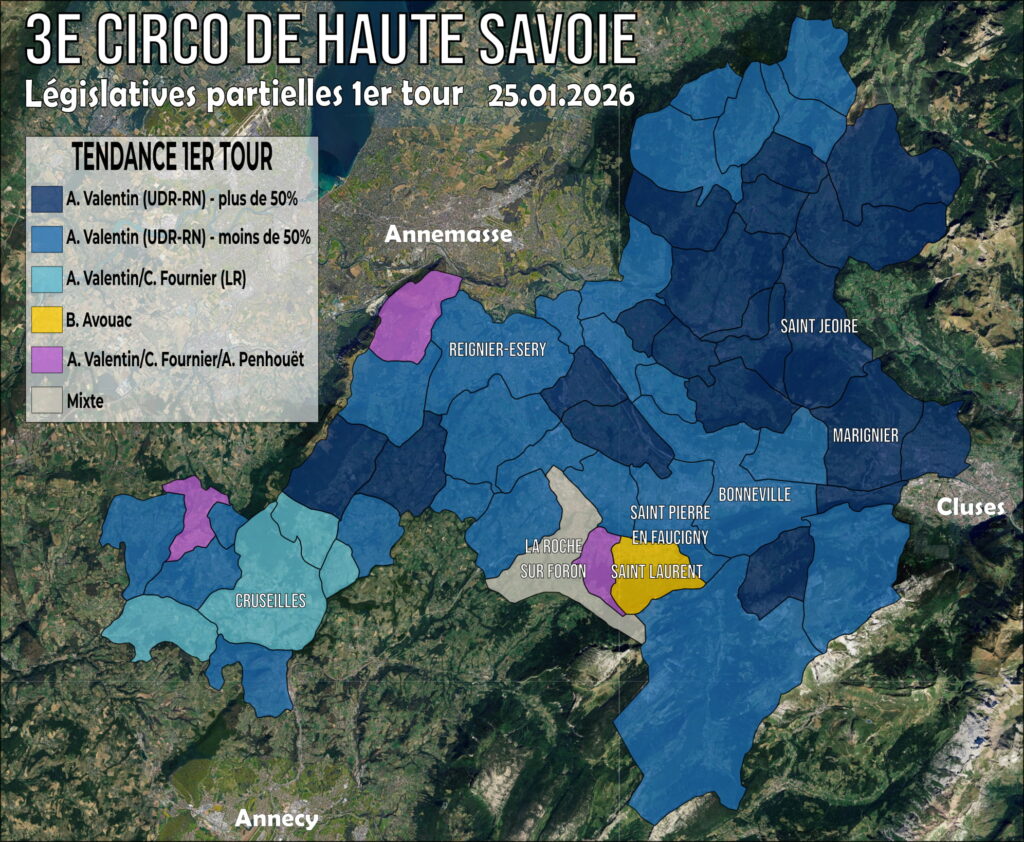
Not all elections can be directly compared, and this is a classic methodological pitfall. A two-round majority system (French legislative or presidential elections) does not produce the same voter behaviour as a proportional list system (French municipal elections in large cities, Belgian communales, Dutch gemeenteraadsverkiezingen, Italian elezioni comunali). In the first round of a majority system, voters tend to vote more sincerely; in the second round, they vote strategically by eliminating the candidate they reject most. In a proportional system, smaller parties have a better chance of winning seats, which changes the geography of votes. To compare intelligently, you must therefore prioritise elections of the same type, or failing that, isolate comparable variables: the first-round score of a presidential election is comparable to the first-round score of a legislative election, but not to the final score of a proportional municipal election. In Quebec, the question arises when comparing provincial general elections (first-past-the-post, single round) with municipal elections whose rules vary by city. In Belgium, the proportional system facilitates comparisons between communales, régionales and fédérales, with the usual adjustments. In Germany, comparing Erststimme and Zweitstimme results across different elections requires careful methodological handling.
How Do I Use the Geography of Previous Results to Choose Candidates and List Composition?
This is an underestimated yet decisive question. A list leader or local candidate does not have the same added value in every neighbourhood. A locally known elected official brings several hundred votes in their home polling station and neighbouring precincts, and virtually nothing elsewhere. A media personality brings a global effect but without territorial anchoring. A candidate from a cultural minority background can specifically mobilise certain working-class neighbourhoods (quartiers populaires, achterstandswijken). The geography of previous results makes it possible to identify orphan precincts: those where your political family historically records its worst scores, often for lack of a local figure. Placing a candidate rooted in those orphan precincts on the list is the most effective way to regain ground. Conversely, stacking candidates who all come from the same affluent neighbourhood produces no compositional effect. This logic applies to the composition of a Belgian communal list with devolving effect (voorkeurstemmen), a French municipal list with parity requirements, a Quebec or Swiss list, a German Kommunalwahl list, or a British council slate. It is an eminently strategic trade-off that experienced candidates master intuitively and that electoral geomarketing makes it possible to objectify.
Which Sociological Variables Should I Cross-Reference With Results to Refine the Analysis?
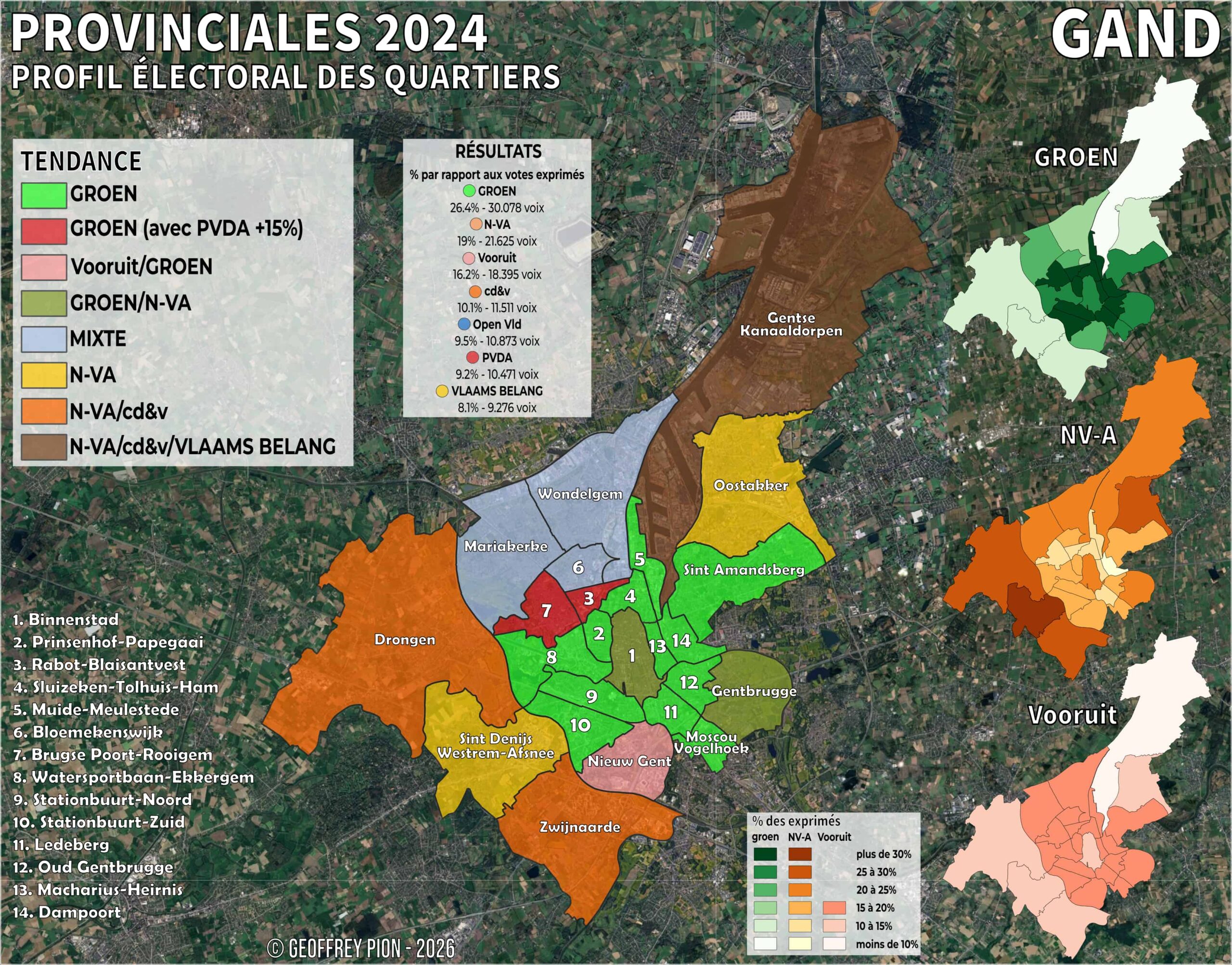
A raw election result explains nothing on its own. To understand why a precinct votes the way it does, and to anticipate its evolution, you must cross-reference scores with the sociological variables of the neighbourhood. Five variables systematically emerge as the most explanatory across democracies. Socio-professional composition (share of executives, employees, manual workers): available via INSEE in France, Statbel in Belgium, Statistics Canada in Quebec, the Federal Statistical Office in Switzerland, STATEC in Luxembourg, CBS in the Netherlands, Destatis in Germany, ONS in the United Kingdom, the Census of India. Education level: strongly correlated with contemporary political cleavages in every Western democracy. Average age and age pyramid: determines the perceived stakes (education, employment, pensions). Housing tenure (owners versus renters, social housing versus private): a highly divisive variable everywhere. Housing type (suburban detached, apartment blocks, mixed — lotissement, verkaveling, Siedlung, council estate, Plattenbau, flatgebouw): largely overlaps with the preceding variables. Cross-referencing these five variables with polling-station results makes it possible to build explanatory and predictive models that identify not only the precincts where your political family has room to grow, but also the thematic levers to activate in each neighbourhood. This is the central approach of electoral geomarketing.
When Should I Start the Preparatory Analysis for the Next Election?
As early as possible, and certainly not during the official campaign period. For a local election, the strategic analysis and preparation phase should begin 18 to 24 months before polling day. This allows time to gather the data, produce the maps, define the strategy, build the volunteer team, set up campaign offices in the right locations, and above all begin grassroots door-to-door canvassing (porte-à-porte, huis-aan-huis, Haustürwahlkampf, doorstep campaigning) before the final battle. Candidates who wake up six months before the vote systematically arrive too late: their most serious opponents have already mapped the territory and identified their targets. For the 2027 French legislative elections, serious preparation starts now, based on a cross-analysis of the 2024 legislatives and the 2026 municipales in each constituency. For the 2030 Belgian gemeenteraadsverkiezingen, the right preparation calendar starts in early 2028. For the 2029 Quebec municipal elections, the strategic phase should begin in 2027. For the 2029 German Kommunalwahlen, for the next British council elections, for Indian state elections, for Greek dimotikes ekloges — the 18-month rule holds everywhere. Starting early is not optional: it is the condition for victory.
Electoral Geomarketing: Take Action
Are you a candidate in an upcoming election anywhere in the world, and do you want to seriously prepare your campaign by exploiting previous election results? Here are some key electoral milestones and the previous elections to analyse for each
Country | Election | Year
France | Presidential & Legislative | 2027
Latvia | Legislative | 2026
Belgium | Federal & Regional | 2029
Quebec | Provincial (general) | 2026
Quebec | Federal (Canada) | 2029
New Zealand | Legislative | 2026
Taiwan | Local | 2026
Australia | Federal | 2028
Greece | Legislative | 2027
Germany | Legislative | 2029
India | Federal | 2028
Spain | General | 2027
Sweden | General | 2026
Finland | Legislative | 2027
Italy | Municipal | 2026
Malaysia | Federal | 2028
Read more
→ Electoral Geomarketing: Definition, Methodology and Strategic Applications
→ FAQ n°2 — Voter Targeting in Election Campaigns
→ FAQ n°4 — Mobilising Non-Voters
ElectionResults #CampaignPreparation #ElectoralAnalysis #SwingPrecinct #PollingStationData #ElectoralProjection #VoterTargeting #ElectoralGeomarketing #CampaignStrategy #PoliticalMarketing #France #Belgium #Quebec #Netherlands #Germany #UK #India #Greece #Australia #Sweden #Italy #Switzerland